Tuesday, 15 November 2016
Audience Theory
Uses and gratifications- Blumer and Katz, Denis McQuail
Denis McQuail (1972) discussed four theoretical audience pleasures:
What are they?
1. Survilliance- Our need to know what is going on in the world
2. Personal relationships: Our need to interact with other people
3. Personal identity- Our need to define our identity and sense of self
4. Diversion- The need for escape, entertainment and relaxation
Cultivation Theory:
Another theory that treats the audience as passive
It suggests that repeated exposure to the same message- such as an advertisement- will affect attitudes
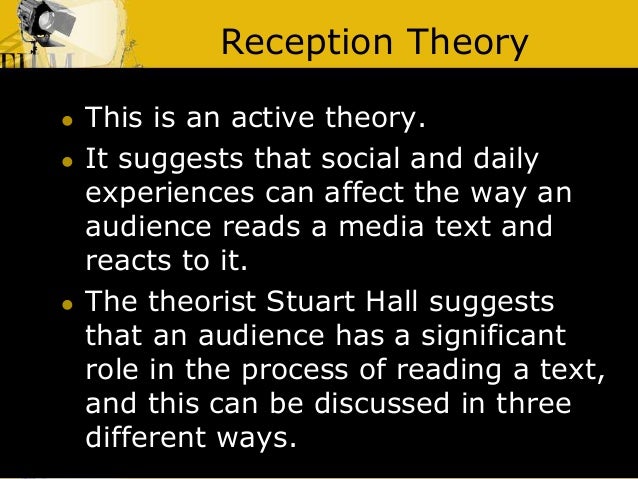
Reception Theory This is an active theory. It suggests that social and daily experiences can affect the way an audience reads a media text and reacts to it. The theorist Stuart Hall suggests that an audience has a significant role in the process of reading a text, and this can be discussed in three different ways.
The Dominant or Preferred Reading This claims that the audience shares the code of the text and fully accepts its preferred meaning as intended by the producers
Negotiated Reading This claims the audience partly shares the code of the text and broadly accepts the preferred meaning but can change the meaning in some way according to their own experiences.
Oppositional Reading This claims the audience understands the preferred meaning but does not share the text’s code and rejects this intended meaning.
Interactive Audiences These are increasingly popular. Examples are: Audiences being asked to be a voter (X Factor etc) Citizen Journalists – news asking for viewers to send in photos and the like Documentary style programmes about so called ‘real’ people doing professional things
21st Century Audiences Websites such as MySpace, YouTube, and blogs offer new possibilities for audiences. Digital transmission and production means there are many new channels and ways of viewing media texts not just on television but also via the internet.
"Before companies make a product they will have an ideal audience member in mind. This is called an 'imaginary entity'"
What would a company have an ideal audience member in mind before a product is made? So they have an audience in mind and and will target that specific audience
What methods would a company use to research its audience? Primary research e.g. surveys and questionnaires.
Here are 3 examples of imaginary entities, Kiss Radio, their imaginary entity varies at different times depending who's show is on.

Subscribe to:
Post Comments (Atom)
No comments:
Post a Comment